Go to market strategy
The Forklift Problem: Why Movement Isn’t the Same as Growth in B2B
5 Minutos
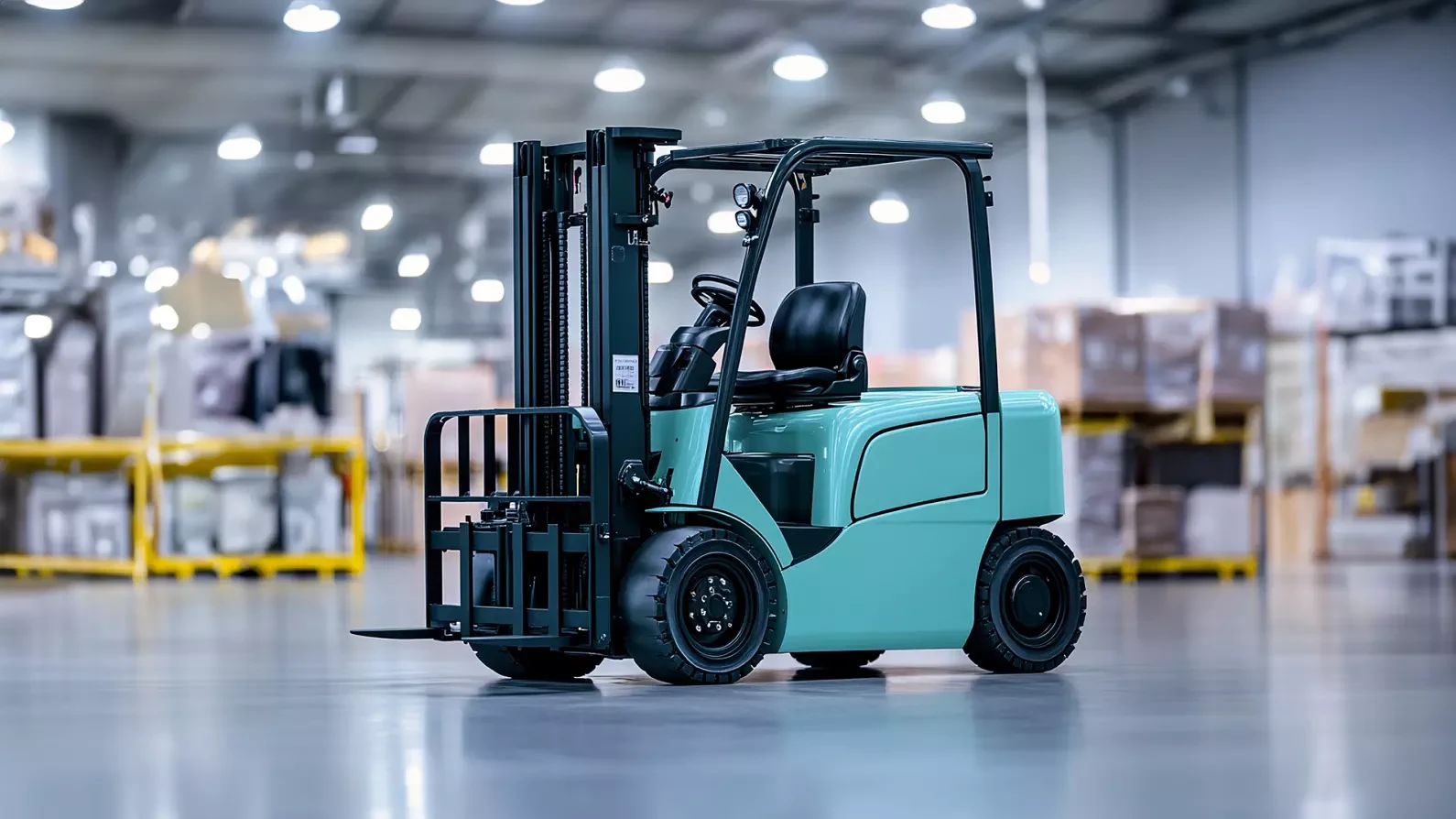
The only end-of-year reflection that matters: Did you move forward, or just move?
There’s a particular, almost hypnotic sound that defines the industrial year-end: the steady, rhythmic beep… beep… beep of a forklift backing up in a crowded warehouse.
It's practical. It's predictable. It's often background noise.
But if you pause long enough to listen—really listen—you realize it’s also the perfect, uncomfortable metaphor for the year that just ended.
The forklift worked non-stop. It carried weight, moved quickly, shuttled from one location to another, and burned through thousands of hours of energy. Yet, despite all that furious activity, it’s entirely possible it ended the day remarkably close to where it started.
And that is the uncomfortable truth many B2B leaders face in December. We look at the metrics and wonder why so much movement produced so little meaningful progress.
You had trade shows. You published new PDFs. You launched campaigns and special promos. Your team stayed late, hustled hard, and demonstrated total commitment.
But the year closed without the momentum you expected.
Especially in long-cycle, complex B2B environments where sprawling buying committees, unrelenting procurement, and quiet commercial friction erode even the best strategic intentions.
It's not because you didn’t work hard.
It’s because hard work isn’t the same as aligned work.
And as one year ends and another begins, that distinction is the only one that matters.
If you’re like most industrial and B2B leaders, your year was defined by these reactive moments:
These aren't failures of effort. They are signals that your entire commercial system is operating in reaction mode rather than alignment mode.
Deals die not because the competition is better, but because the handoffs between marketing, sales, engineering, ops, and procurement are fragmented. Everyone is moving, often quickly, but no one is in harmony.
The forklift metaphor becomes painfully accurate: activity is not advancement.
The good news? A new year is a natural inflection point, a chance to replace improvisation with intention and build a system where effort compounds instead of evaporates.
Momentum doesn’t appear by accident. It appears when you design it slowly, intentionally, and with the humility to admit what wasn’t working and the courage to commit to what will.
Here are the five moves that define the companies who grow next year instead of repeating the last one.
A surprising number of industrial companies still describe their market with broad, vague phrases: "any plant with power and air," or "any organization that uses our equipment."
This kind of forced universality guarantees diluted messaging, scattered resources, and a pipeline full of leads that never convert.
A strong start to the new year requires specificity. Not theoretical specificity; operational specificity.
Maintenance cares about uptime; Engineering cares about performance; Procurement cares about total cost of ownership. And those priorities do not converge on their own.
Choosing your Ideal Customer Profile (ICP) is the single decision that shapes every other decision you make. It forces you to build strategy around real human decision-makers, your "Spec-In Sam," your "Uptime Uma," and your "Savings Sal", not abstract market personas.
When you start the year with clarity, the entire year inherits that clarity.
Most companies complete a SWOT analysis in January, then file it away as quickly as holiday decorations.
The industrial world doesn't operate on PowerPoint cycles; it operates on production cycles. The companies that win next year build an operational SWOT—a living tool, not a checklist.
The true strategic shift comes from choosing your competitive mode for the coming year: Will you win by owning the spec? With unmatched quoting speed? With unparalleled field assurance? Or on lowest landed cost?
Trying to win in all four modes guarantees you win in none. Choosing one mode turns competition into a solvable equation.
Strategy is not about what you could do. It is about what you will choose to do.
Procurement is not the villain; it is simply the gatekeeper of risk and cost.
But if your value narrative is built around generic statements like “high quality,” “trusted brand,” “industry leader”, then procurement has no choice but to treat you as a commodity.
A new year requires a new level of specificity. A value promise grounded in measurable outcomes, not adjectives.
For [application], we deliver [measurable result] through [mechanism], enabling plants to reduce [specific cost or risk].
This is the language procurement recognizes, respects, and responds to.
It's not the tagline that makes the difference. It's the proof that lives behind it.
Every company has good intentions in January. The difference is the willingness to operationalize those intentions with a clear, unified playbook.
A 90-day playbook with:
...is often the difference between teams who execute and teams who improvise.
When your ABM supports your distributors, and your distributors reinforce your messaging, and your messaging is backed by RevOps SLAs and quoting discipline, you no longer operate like a warehouse full of independent forklifts.
You operate like a unified system. This is the secret to built momentum.
The companies that actually achieve lofty goals are the ones who choose a small set of metrics that are tied directly to operational and commercial outcomes:
If a metric cannot change a quoting, scheduling, pricing, or prioritization decision, it is not a strategic metric, it is simply decoration on a dashboard.
And as AI becomes mainstream, the companies that win will adopt it with guardrails: protecting customer drawings, validating generated content, and ensuring fairness in pricing and scoring models.
AI cannot replace trust. But it can accelerate it if deployed responsibly.
As the calendar resets, the plant floor quiets, and the reports are finalized, you’ll hear that familiar sound again—beep… beep… beep. The year backing up. Your perspective backing up.
The beauty of this moment is that the year ahead is unclaimed.
No motion has been spent. No friction has accumulated. No momentum has been lost.
You have the opportunity to choose alignment over activity, clarity over clutter, and strategic movement over reactive motion.
This is the year your forklift does more than move.
This is the year it moves you forward.
If you are ready for a year defined by commercial clarity, strategic alignment, and a system that finally compounds, then it’s time to work with a team built for B2B complexity.
At Craft, our fractional CMOs specialize in helping B2B leaders:
Your best year won’t happen by accident. It happens by design.
Start the year with momentum.
Start the year with clarity.
Start the year with Craft.
Go to craftmarketingandbranding.com
When you’re ready, we’re ready.



Las 6 dimensiones de un equipo de alto desempeño, como cuerdas de una guitarra que deben afinarse.

Cómo integrar la inteligencia artificial con las 6 dimensiones de un equipo de alto desempeño.

Adáptate más rápido con OODA, Lean o el método científico: tres enfoques comprobados para impulsar el cambio …

To drive value creation, companies can incorporate these transformation value drivers into their core strategy.